The B2B Buyer's Guide to Car Navigation and Instrument Cluster Manufacturing in China: What Actually Matters in 2026
Practical field notes for wholesalers, brand owners, and automakers sourcing head units, digital clusters, and automotive display systems — written by people who actually build them.
Why This Guide Exists
If you've landed here, you're probably not browsing. You're somewhere in the middle of a sourcing decision — maybe you're a wholesaler trying to expand your catalog with higher-margin automotive electronics, maybe you're a brand owner looking for an OEM partner to put your logo on a head unit line, or maybe you're on the procurement team at an automaker trying to find a second-source supplier for digital instrument clusters before your current one raises prices again.
Whoever you are, you've probably already noticed something frustrating: the information out there about sourcing car navigation systems and instrument clusters from China is either too thin to be useful, or so aggressively promotional that you stop trusting it by the third paragraph. There's not much in the middle. That middle space — practical, honest, written by someone who actually works inside a manufacturing facility — is what this guide is trying to fill.
We're writing this from the floor, more or less. Dingpei Industry (Shenzhen) Co., Ltd. has been designing and manufacturing car navigation systems and automotive instrument clusters for years, and our customers span the kind of audience you're part of: global wholesalers, regional brands, and OEM programs with vehicle manufacturers. So this isn't a theoretical piece. It's a distillation of the conversations we have every week with buyers who are trying to figure out whether we — or anyone else — are the right partner for them.
The goal isn't to sell you on us. The goal is to give you a framework for evaluating any car navigation manufacturer or instrument cluster supplier, so that whatever decision you make is a better-informed one. If that decision leads you to us, great. If it leads you somewhere else, we'd still rather you got there with your eyes open.
Let's get into it.
The Market Reality: Why Everyone's Suddenly Talking About Automotive Displays
If you've been in the automotive electronics space for more than a few years, you've watched the center stack and the instrument panel transform from afterthoughts into the most contested real estate inside a vehicle. Ten years ago, a head unit was a radio with a small screen bolted into the dash. An instrument cluster was a set of analog gauges and a few warning lights. Both were commoditized. Both were cheap. Neither was something a product manager got excited about.
That's changed, and it's changed fast.
Today, the head unit is often the single most expensive piece of electronics in the cabin — a large touchscreen running an embedded operating system, handling navigation, media, phone integration, vehicle settings, and increasingly, ADAS-related functions. The instrument cluster has gone fully digital in most new vehicle programs, replacing mechanical gauges with a configurable TFT display that can swap layouts, show turn-by-turn navigation, render 3D vehicle models, and alert the driver to lane departures or collision warnings. In premium vehicles, the two displays are merging into a single curved pillar spanning the width of the dashboard.
A few numbers worth keeping in your head:
• Global automotive display panel shipments crossed 200 million units annually and are still growing, driven by the shift from single-screen to multi-screen cabin architectures.
• The digital instrument cluster market alone is projected to grow at a double-digit CAGR through the back half of this decade as the last analog clusters cycle out of new vehicle programs.
• Average display size per vehicle has roughly doubled over the past five years, and the trend is still climbing — particularly in commercial vehicles and emerging-market passenger cars, where larger infotainment screens have become a selling point.
For B2B buyers, this matters in a specific way. The category that used to be "car electronics" has split into a stack of distinct product lines — navigation head units, digital clusters, head-up displays, rear-seat entertainment, passenger displays, commercial fleet telematics units — each with its own technical requirements, certification paths, and supply chain. You can't treat them as one thing anymore. A supplier that's excellent at building an aftermarket Android head unit might have no business building a safety-critical instrument cluster for a passenger vehicle, and vice versa.
Which brings us to the first real question.
Knowing What You're Actually Buying
This sounds obvious, but it's the single most common point of confusion we see in early supplier conversations. Buyers will say "we need a car navigation system" and mean wildly different things. Before you start evaluating manufacturers, get precise about which of these you're sourcing:
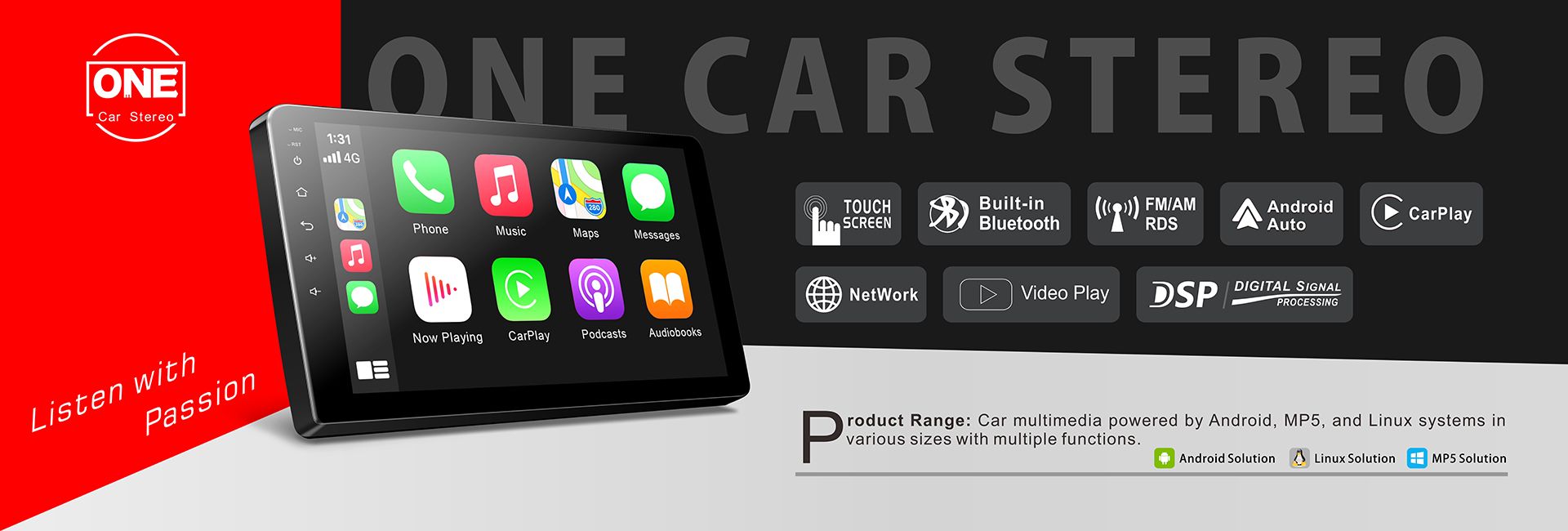
Aftermarket head units. These are the retrofit navigation and infotainment units that go into vehicles that didn't ship with a modern screen, or that owners want to upgrade. They're typically Android-based, sized to fit standard DIN or double-DIN openings, and priced for the consumer aftermarket. If you're a wholesaler selling through regional distribution, this is likely your volume product. Margins are thinner, but the market is large and the technical bar is lower — no safety certifications, no vehicle-program homologation, shorter product lifecycles.
OEM head units. These ship installed in new vehicles. The requirements are a different animal entirely: automotive-grade components, long-term supply commitments (often 5–8 years of service parts availability), environmental validation across temperature, vibration, humidity, and electromagnetic compatibility, and integration with the vehicle's CAN bus and factory amplifier. If you're a brand owner or automaker, this is where you live. Pricing is higher, lead times are longer, and the supplier selection process is much more rigorous.
Digital instrument clusters. These are the displays behind the steering wheel that replace analog gauges. They're safety-relevant — a frozen cluster is a real problem, not an annoyance — so the development process is more disciplined, the software is more tightly controlled, and the validation cycles are longer. A supplier that only builds aftermarket head units usually can't do this well. A supplier that builds OEM clusters can usually also build head units, but the reverse is not true.
Head-up displays (HUDs). A smaller but fast-growing category. Projection optics, optical-grade glass or plastic combiners, tight tolerances on brightness and distortion. Most HUD suppliers are either specialists or divisions of larger Tier 1s. If you need a HUD program, you're probably not shopping on Alibaba.
Commercial and fleet displays. Often overlooked but a real category — ruggedized displays for trucks, buses, agricultural equipment, construction machinery. Different environmental specs (broader temperature range, more vibration, dust and water ingress), different connectivity (CAN J1939 instead of passenger-car CAN), different expectations on lifecycle length.
If you're a wholesaler, you probably care most about aftermarket head units and maybe light OEM programs for regional brands. If you're an automaker, you're sourcing OEM head units, digital clusters, and possibly HUDs. Knowing which of these you need — and being honest with yourself about the certification and lifecycle requirements — narrows your supplier search faster than any other single step.
The buyers who get into trouble are the ones who start the conversation with "we need a navigation system" and don't specify which category. Suppliers will happily quote you something. It just might not be the right something.
What Actually Differentiates a Good Car Navigation Manufacturer
There's a lot of supplier marketing copy out there that lists ten or fifteen "capabilities" and calls them differentiators. Most of them aren't. ISO 9001 certification, a website in English, a salesperson who answers emails promptly, and the ability to send you a sample — these are table stakes. Every supplier you'd seriously consider has them.
The things that actually separate a good manufacturer from a marginal one are harder to put on a sell sheet. Here's what we'd look at if we were on your side of the table.
Real Control Over Hardware and Software
A surprising number of "manufacturers" in this space are integrators. They buy a finished motherboard from a design house in Shenzhen, buy a screen from a panel broker, buy an enclosure from a sheet metal shop, assemble it all into a housing, slap a logo on it, and ship it. There's nothing inherently wrong with this — integrators can be a good fit for low-volume aftermarket work — but you should know which kind of supplier you're dealing with.
A manufacturer with genuine in-house hardware design can modify a board for your specific requirements: change the connectivity stack, add or remove inputs, swap the MCU, tune the audio path, integrate a different CAN transceiver. They can also tell you why a particular change matters or doesn't, instead of just quoting you a price for it. Software is the same story: a supplier with their own firmware and Android BSP team can fix bugs, customize the launcher, integrate third-party apps, and support the product after launch. An integrator depends on the upstream design house for all of that, and they'll tell you so only if you ask directly.
Ask potential suppliers how many of their engineers work on hardware versus firmware versus app-level software. Ask whether they maintain their own Android BSP or use a reference BSP from a chipset vendor. Ask what they do when a customer finds a bug — do they patch it themselves, or do they escalate to an upstream partner? The answers tell you a lot.
A Track Record in the Right Category
This is the single most undervalued signal. If you're sourcing digital instrument clusters for an OEM program, you want a supplier who has shipped digital clusters for OEM programs before — not someone who has built a lot of aftermarket head units and thinks clusters are a natural extension. They're not. The development discipline is different, the validation process is different, and the failure modes are different.
Ask for specific program references. Not "we work with major automakers" — which automakers, what platforms, when, and what volume. A supplier who has shipped a few hundred thousand clusters into a production vehicle program has been through the wringer in ways that a supplier who has shipped ten thousand aftermarket units has not. The former can navigate PPAP, run DV/PV testing, manage ECU software releases, and survive an OEM audit. The latter probably can't, or will learn painfully on your dime.
Vertical Integration That Actually Means Something
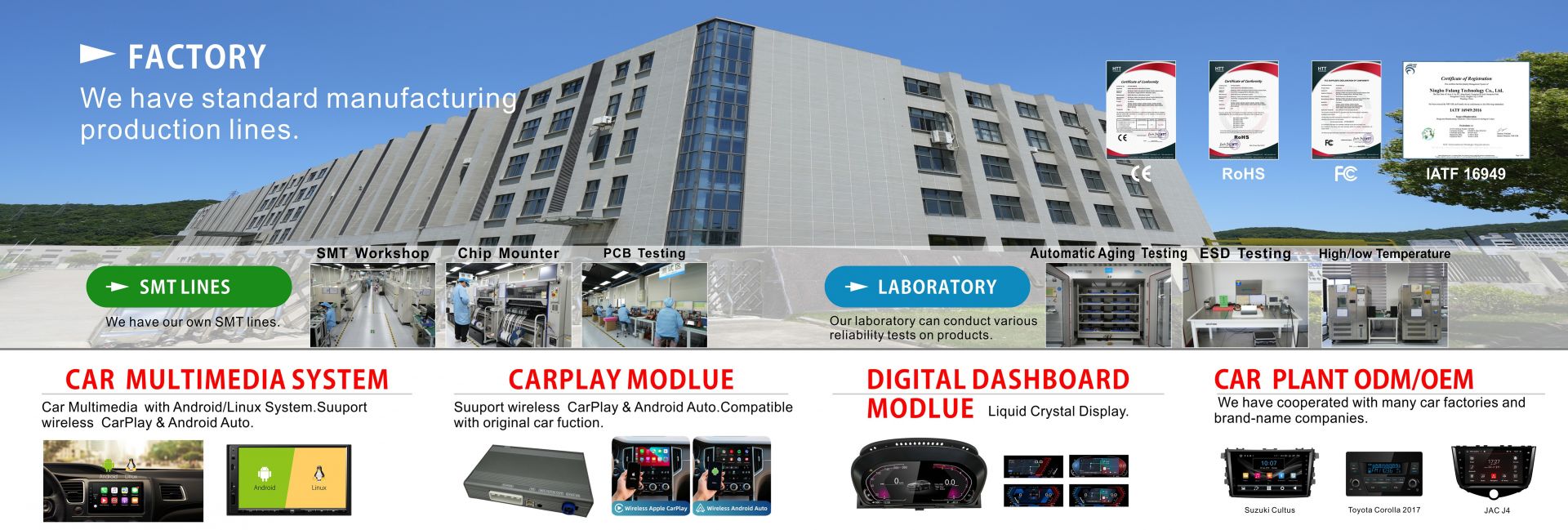
Vertical integration is a buzzword that gets thrown around loosely. What it should mean, in practice, is that the supplier controls enough of the production stack to be accountable for the whole product. That usually means: in-house SMT lines for board assembly, in-house assembly for final product, in-house testing (functional, environmental, aging), and in-house quality engineering. It does not necessarily mean they make their own LCD panels — almost nobody in this industry does, because the panel market is dominated by a handful of global suppliers — but it does mean they have a documented relationship with panel vendors and a plan for panel supply continuity.
The benefit of real vertical integration isn't cost, although there's some cost advantage. The benefit is that when something goes wrong — a batch failure, a field return, a yield problem — there's one throat to choke and one team that can trace the issue end-to-end. With a loosely integrated supply chain, every defect becomes a finger-pointing exercise between the board vendor, the screen vendor, the software house, and the assembler. You don't want to be the one mediating that.
Engineering Involvement in the Quote
This is subtle but important. When you send a supplier an RFQ, pay attention to who responds. If the quote comes back quickly from a salesperson with no engineering input, it's a sign that the supplier is quoting you a standard product out of a catalog. That's fine if that's what you want, but it tells you nothing about their ability to handle customization, solve integration problems, or support you through a real product development cycle.
If the quote comes back with engineering questions — clarifications on the CAN bus protocol you're using, questions about the target display resolution and brightness, pushback on a tolerance that doesn't make sense, a suggestion that a different connector would save cost without sacrificing reliability — you're dealing with a supplier whose engineers are actually engaged with your project. That's a very good sign. It usually correlates with everything else you want: in-house design capability, real product knowledge, and a culture that takes technical work seriously.
The China Question, Without the Stereotypes
Let's address this directly, because it comes up in almost every B2B conversation and it's usually handled badly.
There's a lingering stereotype — particularly among buyers in North America and Europe who haven't sourced from China before — that Chinese manufacturers are uniformly cheap, low-quality, and willing to cut any corner to win a quote. This is wrong in a specific way, and understanding how it's wrong matters for your sourcing decision.
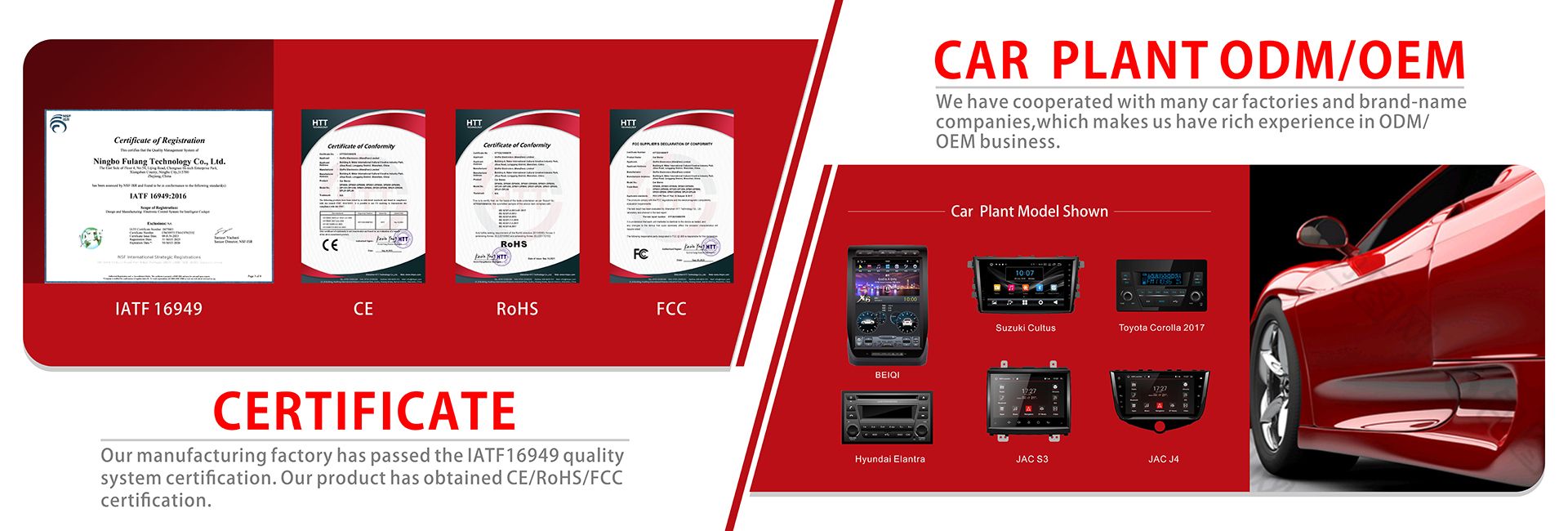
China's automotive electronics manufacturing base is not monolithic. It spans a spectrum, and where a given supplier sits on that spectrum is usually a function of who their existing customers are. Suppliers whose customers are Chinese domestic automakers — Geely, BYD, NIO, Xpeng, Chery, GAC, SAIC — operate under development and quality disciplines that are essentially identical to what you'd find at a European Tier 1. They run APQP, they manage PPAP packages, they pass IATF 16949 audits, they survive annual supplier reviews, they hold safety-critical responsibility for clusters and body control modules. These suppliers are perfectly capable of working with Western automakers and brand owners; many of them already do.
At the other end of the spectrum are the shops that build strictly for the consumer aftermarket and the low-cost regional distribution channel. These are the suppliers you'll find most easily on B2B marketplaces. Their products are real and they have a legitimate market, but they're built to a different cost and quality target, and they're not the right partner for an OEM program or a brand-line product that needs to survive a warranty cycle.
The point is: "made in China" tells you almost nothing useful about a supplier. What tells you something useful is who they already build for, what certifications they hold, what development processes they run, and what their engineering bench looks like. Evaluate on those dimensions, not on geography.
Shenzhen specifically has become the de facto center of gravity for automotive display and navigation manufacturing in China, and for good reason. The supply chain density is unmatched — within a one-hour drive of our facility you can reach panel vendors, IC distributors, connector suppliers, PCB fabricators, sheet metal shops, plastic injection molders, and packaging suppliers. That density translates into shorter lead times, lower minimum order quantities on tooling and components, and a deeper pool of engineering talent than you'll find anywhere else in the world. For a buyer, it means a Shenzhen-based supplier can usually move faster on prototyping, customization, and iteration than a supplier based anywhere else.
That's not a marketing pitch — it's a structural advantage of the region, and it's why most of the serious players in this category, including the global Tier 1s, maintain a presence here.
Certifications and Compliance: What You Actually Need to Ask For
This is an area where buyers routinely either under-ask or over-ask, and both mistakes cost money.
Under-asking looks like this: a buyer takes a supplier's word that their product is "CE certified" without asking to see the certificate, the test report, or the test lab. It turns out the certificate is for a different product, or the test report is three years old and covers a different hardware revision, or the "CE mark" on the product is self-affixed with no underlying compliance file. When the product hits customs in the EU and gets flagged, or worse, when it fails in the field and a regulator asks for the technical file, the buyer is left holding the bag.
Over-asking looks like this: a buyer demands every conceivable certification — IATF 16949, ISO 26262 ASIL-D, CE, FCC, RoHS, REACH, UN ECE R10, and a handful of others — for a product that doesn't need most of them. The supplier either walks away (because they know the buyer doesn't understand what they're asking for) or quotes a price that reflects a lot of unnecessary compliance overhead.
The right approach is to match the compliance ask to the actual product and market. Here's a rough map:
• For aftermarket head units sold into the EU: CE (EMC and RoHS), REACH compliance, and ideally E-mark (UN ECE R10) if the product is marketed as vehicle-installed rather than portable. RoHS and REACH are non-negotiable for EU market access.
• For aftermarket head units sold into North America: FCC (Part 15 for unintentional radiators, Part 15C if there's intentional RF transmission like Bluetooth or Wi-Fi), and compliance with applicable state-level chemical regulations (California Prop 65 in particular).
• For OEM head units and digital clusters: IATF 16949 is the baseline quality management expectation. For safety-relevant clusters, ISO 26262 functional safety — typically ASIL-B for cluster displays — is increasingly expected by automakers, though the market is still transitioning and not every program requires it yet. EMC compliance is usually handled at the vehicle level rather than the component level, but the supplier needs to be able to support vehicle-level testing.
• For commercial vehicle displays: Additional environmental standards apply — broader operating temperature ranges, vibration profiles specific to heavy-duty vehicles, ingress protection ratings (IP6K9K for some applications), and CAN protocol conformance to J1939 rather than the passenger-car variants.
When you ask a supplier about certifications, ask for the documents, not just the claim. A real certificate has a number, an issue date, a scope, and a certifying body. A real test report identifies the lab, the standard, the test setup, and the result. If a supplier can produce these promptly, they've been through the process before and they understand it. If they hem and haw or send you a JPEG of a certificate with the date and number blurred out, you've learned something important.
Customization, OEM/ODM, and What "Custom" Actually Costs
Almost every B2B buyer we talk to wants some level of customization. Sometimes it's minimal — a logo on the boot screen, custom packaging, a regional map preload. Sometimes it's substantial — a new enclosure, a different screen size, integration with a vehicle's CAN bus, custom Android launcher, preloaded third-party apps.
The rule of thumb is that customization falls into three cost tiers, and knowing which tier you're in helps you have a more productive conversation with a supplier.
Tier 1: Software and branding customization. This is the cheapest tier and often the most valuable. Logo on boot, custom wallpaper, preloaded apps, regional language packs, custom launcher UI, map data for specific markets. A capable supplier can turn this around in a few weeks with minimal NRE cost, sometimes none at all if the volume justifies it. If you're a wholesaler looking to differentiate your SKU from the next distributor's SKU, this is where you start.
Tier 2: Hardware configuration changes. Swapping the screen size or resolution, changing the RAM and flash configuration, adding or removing connectivity (4G modem, Wi-Fi 6, GPS+GLONASS+BeiDou, extra USB ports), changing the connector set, modifying the audio output stage. This tier involves real engineering work and usually a modest NRE charge, plus component cost deltas. Lead time extends by several weeks for the engineering work, and minimum order quantities go up because the supplier is committing to a specific BOM variant.
Tier 3: Full custom product development. A new enclosure (which means new tooling), a custom PCB layout, integration with a specific vehicle platform, full mechanical and environmental validation, and a dedicated production line setup. This is effectively an OEM program, and it's priced like one — significant NRE, multi-month development timeline, and MOQs that reflect the tooling and validation investment. If you're an automaker or a brand owner with a serious product program, this is where you live, and you should be evaluating suppliers on their program management capability as much as on their hardware capability.
One thing worth being honest about: NRE charges are not a profit center for a good supplier. They exist to cover the engineering hours and tooling costs that the supplier would otherwise eat. A supplier who quotes you zero NRE on a Tier 3 project is either planning to recover the cost in unit pricing (which means you'll overpay if your volumes grow), or they're not actually doing the engineering work they claim. Neither is good for you long-term.
Pricing: What Drives Cost, and What Doesn't
Everyone wants to talk price early. We get it — budget drives decisions. But the way to think about pricing in this category is to understand what actually drives it, because that tells you where you have leverage and where you don't.
The display panel is usually the single largest cost component. For a head unit with a 9-inch or larger IPS touchscreen, the panel can represent 25–35% of the total BOM cost. Panel pricing fluctuates with the broader LCD market, which moves in cycles. When panel supply tightens — as it has periodically over the past several years — prices spike and lead times stretch. A supplier with strong panel vendor relationships and forward-buying capability can smooth this for you; a supplier buying panels on the spot market will pass every price swing straight through to you.
The application processor and memory define the performance tier. A head unit built on an entry-level quad-core SoC with 2GB RAM and 32GB flash is a different product, at a different price point, than one built on an octa-core SoC with 6GB RAM and 128GB flash. The gap can be $20–$40 in BOM cost, which translates to a meaningful difference in your landed cost. Know which tier you actually need — over-speccing wastes money, under-speccing creates a product that lags in real-world use and generates returns.
Connectivity is à la carte. GPS-only, GPS+GLONASS+BeiDou, 4G LTE modem, Wi-Fi 6, Bluetooth 5.0, external microphone, external antenna options — each of these adds cost. Some are essential (multi-constellation GNSS is basically table stakes now), some are market-specific (4G modems matter less in markets where drivers rely on phone tethering), and some are premium features that let you position the product at a higher price point. The right mix depends on your target market and price tier.
Certification and testing are real costs. EMC testing, environmental validation, safety compliance — these are not free, and a supplier who's actually doing the work will build them into the price. A supplier who isn't doing the work will quote you a lower price and hope you don't notice until something goes wrong.
Volume matters, but not linearly. Going from 1,000 units to 5,000 units per order will get you a meaningful price break, mostly through panel and component volume pricing. Going from 50,000 to 100,000 units per order gets you a smaller incremental break, because most of the cost structure is already optimized at that scale. The big leverage points are at the low end of the volume curve, not the high end.
What doesn't drive cost as much as buyers expect: customization of software, branding, packaging. These are cheap relative to the hardware. If you're negotiating hard on the unit price, focus on the hardware spec — the panel, the SoC, the memory, the connectivity — because that's where the real money is. Don't grind on the $0.50 you might save on packaging; it's not worth the relationship cost, and it's not where your real savings are anyway.
Red Flags When Evaluating a Supplier
We've sat on both sides of the table — buying components and services ourselves, and being evaluated by buyers. Here are the signals that, in our experience, correlate with trouble down the road.
The quote comes back suspiciously fast. A real custom quote takes engineering review. If you send a detailed RFQ on Monday and have a price by Tuesday morning, you're being quoted a catalog product dressed up as a custom solution. That can be fine, but it's not what you asked for, and the supplier should be honest about it.
The price is dramatically lower than everyone else's. In a mature manufacturing category like this one, BOM costs are fairly well-known across the industry. A quote that's 30% below the field usually means one of three things: the supplier is using refurbished or grade-B components, they're quoting a lower spec than you asked for, or they're buying market share and plan to raise prices once you're committed. None of these end well for you.
The supplier won't let you audit the facility. A serious manufacturer expects audits. They may schedule them, they may want advance notice, they may charge you a nominal fee if you want a full quality system audit rather than a walk-through — but they don't refuse. Refusal is a near-certain signal that the "factory" in the marketing photos isn't theirs, or isn't operating the way they claim.
No reference customers will talk to you. Every supplier has a list of "major clients" on their website. Ask to talk to one. If they can't make that happen — with appropriate NDAs and sensitivity to the reference customer's time — the client list is probably aspirational rather than actual.
Quality issues are handled defensively. When you ask about their field return rate, their defect ppm, their warranty claim history, watch how they respond. A supplier who gives you real numbers, talks about what they've improved, and is honest about where they still have work to do is a supplier you can work with. A supplier who says "we have no quality problems" is either lying or not measuring, and you don't want to find out which.
They push hard to lock you in early. Exclusive agreements, large upfront tooling payments before you've seen a prototype, pressure to commit to volume before validation is complete — these are signs of a supplier who's more interested in capturing your business than in doing the work to earn it. Good suppliers want commitment, but they earn it through the development process, not by extracting it upfront.
Questions Worth Asking a Potential Supplier
If you're putting together an RFI or preparing for a supplier visit, here's a set of questions that will tell you more than any sell sheet. We've grouped them by topic; pick the ones relevant to your program.
On the company:
• Who are your top three customers by volume, and what product categories do you build for them?
• What's your annual revenue, and what percentage comes from automotive OEM programs versus aftermarket?
• How many engineers do you have, broken down by hardware, firmware, software, and quality?
• What's the average tenure of your engineering leadership?
On the product:
• Walk me through the BOM of the product you're quoting me. Where are the cost concentrations?
• What panel vendor are you quoting, and what's your alternate source if they go allocation?
• What's your Android BSP strategy — do you maintain it in-house, or do you use a chipset vendor reference?
• What's your typical software update cadence after launch, and how do you deliver updates to the field?
On quality and compliance:
• What's your field return rate on the most recent product line, and what are the top three failure modes?
• Walk me through your DV/PV test plan for a new product. What standards do you test to?
• Can you show me a recent PPAP package for an OEM program?
• What's your process change notification protocol — how and when do you tell me about BOM or process changes?
On the program:
• What's your typical development timeline from kick-off to SOP for a custom product?
• How do you handle design changes after the design freeze? What's your ECO process?
• What's your capacity today, and what's your capacity plan if my volumes double in 18 months?
• What's your end-of-life policy — how long will you support the product after volume production ends?
The suppliers who can answer these questions clearly, without hedging or deflecting, are the ones worth a deeper conversation. The suppliers who can't — or who get visibly uncomfortable being asked — are telling you something important about how they operate.
What's Coming Next in Automotive Displays
If you're making a sourcing decision that will play out over the next three to five years, it helps to have a view on where the technology is going. None of this is secret — it's all visible in the product roadmaps of the major automakers — but it's worth summarizing because it affects what you should be asking suppliers to support.
Larger and more integrated displays. The trend from single 8-inch head units toward 12-inch, 15-inch, and even larger pillar-to-pillar displays is well established and accelerating. Expect to see more programs specifying displays that span the full width of the dashboard, with the head unit and cluster functions running on a shared computing platform rather than separate ECUs. This has implications for supplier selection — the supplier needs to understand domain controller architecture, not just standalone display modules.
Higher resolution and better optical performance. 1920×720 is giving way to 1920×1080 and higher. Mini-LED backlights are entering premium segments for better contrast and HDR performance. OLED is still premium-only due to cost, but it's coming down. If your product roadmap extends past 2027, your supplier should be able to talk intelligently about these technologies and when they'll hit your price tier.
Software-defined vehicle architecture. The shift from fixed-function ECUs toward software-defined vehicle platforms — where features are deployed and updated over the air — is changing what automakers expect from their display suppliers. Displays become less standalone products and more thin clients rendering UI from a central compute module. Suppliers who only know how to build integrated head units with their own SoC and OS will need to adapt; suppliers who already understand display-as-client architecture will have an advantage.
ADAS integration. Instrument clusters and head units increasingly render ADAS-related content — surround-view camera feeds, lane departure warnings, blind-spot indicators, navigation overlays with live traffic and hazard data. This raises the bar on rendering performance, latency, and — for safety-relevant displays — functional safety classification. ISO 26262 ASIL requirements are creeping into categories that didn't used to need them.
Connectivity and over-the-air updates. 5G modems are showing up in premium head units. OTA update capability is becoming a baseline expectation rather than a feature. Suppliers need to understand secure boot, signed firmware, and update orchestration — not just at the head unit level but in coordination with the vehicle's broader update strategy.
For a buyer, the practical implication is this: the supplier you choose today should be able to grow with you over the next product cycle. Ask them about their roadmap. Ask them what they're investing in. A supplier who can only talk about today's product is a supplier who will be a problem in three years.
A Word on Relationships
This is the part of the guide where we're going to get slightly less tactical, because it matters.
Automotive electronics sourcing is not a transactional business, not if you want it to go well. The products are complex, the development cycles are long, the failure modes are consequential, and the cost of switching suppliers mid-program is high. The buyers who get the best outcomes are almost always the ones who treat the supplier relationship as a partnership rather than a vendor management exercise.
What does that look like in practice? It means investing time in the early conversations — not just sending RFQs and comparing price columns, but actually visiting the facility, meeting the engineering team, understanding how the supplier makes decisions. It means being honest about your volumes and your roadmap, even when those numbers are smaller than you'd like them to be, because a supplier who's planning around real numbers can plan well and a supplier who's planning around aspirational numbers will disappoint you. It means sharing your product strategy at a level of detail that lets the supplier invest in the right capabilities ahead of your needs. It means paying your bills on time and not treating payment terms as a free source of working capital.
It also means being willing to push back, to ask hard questions, to walk away from a supplier who isn't meeting the bar. Partnership isn't passivity. The best supplier relationships we've seen — from either side — are ones where both parties hold each other to a high standard and are honest when the standard isn't being met.
If you're a wholesaler, this might mean picking one or two strategic suppliers rather than spreading your volume across five. If you're a brand owner, it might mean committing to a supplier through a product generation rather than re-bidding every cycle. If you're an automaker, it might mean involving your strategic suppliers earlier in the vehicle program rather than treating them as a late-stage procurement decision.
The economics of this category reward depth over breadth. The buyers who build deep relationships with capable suppliers get better pricing over time (because the supplier can plan around them), better product (because the supplier understands their requirements), and better support when things go wrong (because there's a relationship to draw on). The buyers who treat suppliers as interchangeable and re-bid constantly save money in the short term and pay for it in the long term.
Where We Fit In
We've kept this guide deliberately general up to this point, because the framework matters more than any one supplier's pitch. But since you're reading this on our site, it's fair to tell you where Dingpei sits in the landscape we've just described.
Dingpei Industry (Shenzhen) Co., Ltd. designs and manufactures car navigation systems and automotive instrument clusters from our facility in Shenzhen. Our customers are global wholesalers who distribute aftermarket and light-OEM product into regional markets, brand owners who put their own label on our platforms, and vehicle manufacturers running OEM programs that require automotive-grade development discipline.
We maintain our own hardware design team, our own firmware and Android software team, and our own production and test capability. We've shipped product across the categories we've discussed here — aftermarket head units, OEM head units, digital instrument clusters, and commercial vehicle displays — and we've been through the certification and validation cycles those categories require. We work in English and Chinese, we're set up to support global customers across time zones, and we're honest about what we do well and what falls outside our scope.
If you're evaluating suppliers for a program, we'd be glad to be one of the conversations you have. We'll answer the questions in the section above directly, we'll show you our facility if you want to visit, we'll put you in touch with reference customers in your segment, and we'll quote you honestly — including telling you when a requirement is outside what we can support well. We'd rather lose a deal than win one we can't execute on.
If that sounds like the kind of supplier relationship you're looking for, the next step is a conversation. Tell us what you're sourcing, what volumes you're planning, what markets you're targeting, and what timeline you're working against. We'll come back with a real response — not a form email — and we'll tell you straight whether we think we're the right fit.
Closing Thoughts
If you've read this far, you're clearly not making a casual sourcing decision, and we hope this guide has given you a more useful framework than the average supplier marketing page. The categories we've covered — knowing what you're buying, evaluating manufacturers on real differentiators, understanding the China sourcing landscape without stereotypes, matching compliance to your actual market, sizing customization to your real needs, reading pricing intelligently, spotting red flags, asking the right questions, and planning for the technology roadmap — are the same framework we'd use if we were on your side of the table.
The car navigation and instrument cluster category is going to keep evolving quickly over the next several years. Displays will get bigger, software will get more complex, safety requirements will tighten, and the suppliers who thrive will be the ones who invested in real engineering capability rather than just in marketing. As a buyer, your job is to find those suppliers and build relationships with them before you need them. Our job is to be one of the options worth considering.
Whatever you decide, and whoever you decide to work with, we wish you a successful program. And if you want to have that conversation with us — even just to compare notes against another quote you're evaluating — you know where to find us.
Looking for a car navigation manufacturer or automotive instrument cluster supplier? Dingpei Industry (Shenzhen) Co., Ltd. designs and produces head units, digital clusters, and automotive display systems for global wholesalers, brand owners, and vehicle manufacturers. Contact us to discuss your sourcing requirements, request samples, or schedule a facility visit.


 English
 Russian